
*View accurate shipping rates and availability





9 products

Gorgeous freestanding bath design makes a luxurious statement piece for your bathroom 1700mm in length Large size is ideal for bathing for two, p...
View full details
Elegant freestanding design makes a luxurious statement piece for your bathroom renovation Generous size is ideal for bathing for two, perfect fo...
View full details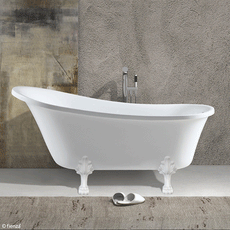
Freestanding claw foot design makes a luxurious statement piece for your bathroom renovation Chrome claw feet Gloss White Acrylic bath Traditiona...
View full details
Please be aware that Australian building codes require the installation of fully removable bath wastes in some situations. We recommend consulting ...
View full details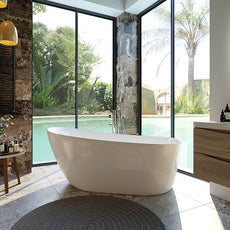
Freestanding bath made from premium Sanitary Grade Acrylic Built-in metal frame and adjustable feet Excellent thermal properties. Back Support Ch...
View full details
Expertly crafted from high-quality materials, the Decina Cosmo Freestanding Bath offers a luxurious and sophisticated addition to your bathroom. Wi...
View full details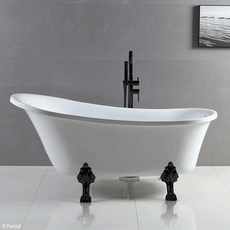
Freestanding claw foot design makes a luxurious statement piece for your bathroom renovation Gloss White Acrylic bath Traditional slipper-shape w...
View full details
Freestanding design makes a luxurious statement piece for your bathroom renovation 1700mm in length Generous size is ideal for bathing for two, p...
View full details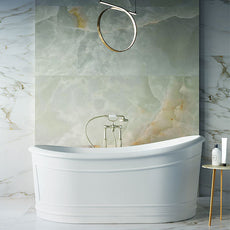
You have an over flow so a plug & waste is included. Metal frame and adjustable feet. Solid Surface Acrylic Acrylic thickness : 3.8mm Size...
View full detailsLet's talk about bathtubs. It’s a pretty big deal in any bathroom reno. This is your spot to escape, the place you go to wash off a tough day. And if you're chasing that perfect blend of old-school cool and serious comfort, the slipper bath probably keeps catching your eye. It has a look, doesn't it? That high back just seems to say, "come on in, stay a while". Here at The Blue Space, we see people fall for them all the time. So, we've put this guide together to cut through the noise and help you figure out if a slipper bath is your perfect match.
Simple. A slipper bath is a freestanding tub where one or both ends are raised and sloped, sort of like the back of a slipper. This isn't just a random design choice from way back when; it was made for comfort. That high back is there to support your head, neck, and shoulders. It lets you lie right back and properly relax without doing that awkward neck-straining thing we've all tried in a standard tub.
They first showed up back in the Victorian era, when having a bath like this was a real status symbol. Picture grand homes with these cast iron beauties sitting proudly in the middle of the room. But things have moved on since the old days. Now, you're spoilt for choice with materials and looks. You can go for the classic clawfoot look or find something super modern and sleek. The idea behind it is still the same, though: it's a bath built for a proper, long, comfortable soak.
Right, let's be real for a second. Slipper baths aren't shy. They're made to stand out, so hiding one in a corner just won't cut it. These tubs are at their best when they have space. Think centre of the room, under a window, or against a great looking wall. It’s all about the feeling it creates. A beautiful slipper bath can completely change the mood of a room. It says "this is a space for relaxing". They're a natural fit for classic or Hamptons-style homes, where their curvy shape just works.
But they’re not just for old-style houses. A really modern one with clean, simple lines can stop a minimalist bathroom from looking too clinical. It adds some curves to break up all the straight lines. If you've got the room for a tub that makes a statement, this is a top contender for your bathtub choice.
Not all slipper baths are created equal. You've got a couple of main types to choose from, and your best bet depends on your style and whether you're a solo soaker or you like to share.
This is your classic slipper bath. One end is high and sloped for your back, and the other end is lower. The low end is usually where you'll find the drain and where the taps will be directed. As you can guess, it's designed for one person. It's built for a solo soak, giving you the best support possible. They're a little more compact than the double-ended versions, so they can be a good option if your space isn't huge but you're set on the slipper style.
A double slipper has two high, sloping ends. The whole thing is symmetrical, which is a really balanced, pleasing look. With this style, the taps and drain are located in the middle. The big plus here is that it's comfortable for two people to share a bath without one person being stuck at the 'tap end'. Even for one person, it gives you the option of which way to face. These tubs are generally a bit bigger and make more of a statement, so you'll need a decent amount of floor space to pull it off.
When most people picture a slipper bath, this is what they see. This is the one that sits on those fancy feet – you know, the ones that look like a claw holding a ball. Lifting the tub up like that cleverly makes your floor space look bigger. The feet themselves are a big style choice, coming in anything from chrome to black or even brass. A clawfoot slipper is the go-to for anyone doing a period-style renovation. It just looks right. You'll find some great examples from brands like Turner Hastings who really nail that traditional vibe.
If you like the slipper shape but the clawfoot thing is a bit too traditional for you, a pedestal or skirted bath is a great alternative. Instead of feet, the bath sits on a solid base that's part of the tub itself. This gives it a more solid, grounded look. It's a cleaner style that can work in both modern and more classic bathrooms. Another bonus is that there are no feet to clean around, which is always a plus. It's a nice middle ground.
What your bath is made of is a big deal. It changes the look, the feel, the weight, and how long your water stays warm.
Most slipper baths you see these days are made from acrylic. There's a good reason for that. It's a lightweight material, so it's easier to get into your house and install, which your builder will thank you for. The surface is warm to touch, not cold like some other materials. It's also easy to clean and holds the heat in your water pretty well. Because it's easy to mould, you can find acrylic baths in tons of shapes. Brands like Caroma and Decina make some brilliant acrylic baths that look great and are built to last.
For that proper luxe, day-spa feeling at home, you have to look at stone resin. It’s a mix of crushed stone and resin, and it creates a tub that feels unbelievably solid. They often have this beautiful matte finish that just begs to be touched. And the heat retention? Incredible. Your water stays hot for ages. Yes, they’ve got some weight to them, but you can feel the quality. A brand like Kaskade Stone is a great place to look for these.
This is the original, the old-school classic. A cast iron bath is practically indestructible. The inside has a super tough enamel coating. But their real claim to fame is heat retention. Once a cast iron tub gets warm, it stays warm for ages. The big catch is the weight. They are incredibly heavy. You'll need to make sure your floor is strong enough to handle it, and installation is a serious job for multiple people.
Think of steel enamel as a solid middle ground. A sheet of steel gets pressed into shape and coated with hard-wearing enamel. The finish is super crisp and it’s tough against scratches. The only trade-off is that it doesn't keep your water hot for quite as long as its acrylic or cast iron cousins.
So, what makes people choose these tubs time and again?
This is the main reason. That sloped back is a game-changer for anyone who actually likes to spend time in the bath. It supports you in all the right places, so you can lie back and properly switch off. No more perching uncomfortably.
You can't help but look at it. The shape alone turns a boring bathroom into a special place. It becomes a room you actually want to hang out in, rather than just a utility space.
It's a myth that these baths only work in old-fashioned homes. Yes, they look amazing in a traditional setting, but a modern slipper bath from a brand like Bao can look incredible in a brand new, minimalist home. It's all about the shape, the feet (or lack of feet), and the taps you pair it with.
When it comes to selling your house, people remember bathrooms with wow-factor. A gorgeous freestanding slipper tub is exactly that. It just looks high-end and can give your home an edge over others on the market.
Right, the practical stuff. Before you get your heart set on one, you need to measure up. A freestanding bath needs more thought than a standard one.
Slipper baths are not just for massive bathrooms. You can find more compact models around the 1500mm or 1600mm mark. A standard size is often a 1700mm bath, which gives most people plenty of room to stretch out. If you've got a huge space and want to go all out, you can even find baths over 1700mm. For really tight spots, our range of small baths might have a solution, though true slipper shapes are less common in the tiny 1200mm, 1300mm, or 1400mm sizes. Remember to think about how tall you are and how you like to sit in a bath.
You can’t use normal wall taps with a freestanding bath. Your plumber will need to run the pipes under the floor. Your main choice is for the taps: floor-mounted or deck-mounted. Floor-mounted taps, or standpipes, look amazing and really complete the look. Deck-mounted taps are fitted onto the rim of the bath itself, which some models allow for. Talk to your plumber early. Where the pipes can go will affect where your bath can go.
The whole point of a freestanding bath is that it's, well, free. Don't cram it up against a wall. You want to leave at least a 15cm gap all around it. Not only does that gap look better, but you'll thank yourself when it's time to clean. Now, if your room is on the squeezy side, don't despair. A back-to-wall freestanding bath is a clever trick. You get that freestanding vibe from the front, but it backs right up to the wall to save precious floor space. Other space-savers include corner baths or the good old built-in bath.
A slipper bath is a fantastic choice, but it's good to know what else is out there.
Freestanding Baths: This is the family the slipper bath belongs to. The general freestanding bath category includes all sorts of shapes, like ovals and rectangles.
Island Baths: These are a bit different. An island bath is designed to be installed on a tiled platform, making it feel more like a permanent, built-in feature.
Spa Baths: If you want jets, you want a spa bath. They turn your bathroom into a hydrotherapy zone and come in all shapes and sizes.
Shower Baths: Super practical for bathrooms that don't have space for a separate shower and bath. A shower bath is designed to do both jobs well.
Fluted Baths: This is a really popular look right now. Fluted baths have a textured, ribbed surface that adds a lot of visual interest. You can find some stunning designs from brands like Fienza and ADP.
While classic white is always a safe bet, you can find slipper baths in some striking colours. A bold black bath can look incredible. You can also find softer, earthy colours like clay which are perfect for a more organic, natural-feeling bathroom. With great brands like Belbagno and Clark in the mix, there's a huge amount of choice. In the end, a slipper bath isn't just about getting clean. It's about giving yourself a small piece of luxury every single day.


